Choosing between waste incineration and pyrolysis puzzles many purchasers for islands and remote‑area waste‑treatment projects
Choosing between waste incineration and pyrolysis puzzles many purchasers for islands and remote‑area waste‑treatment projects.
Conventional high‑temperature incineration achieves volume reduction via full combustion above 850°C. It is proven technology with large throughput. Yet it requires continuous fuel supply and complex flue‑gas systems. Poor operation control may trigger dioxin and heavy‑metal fly‑ash pollution, bringing high long‑term operation costs.
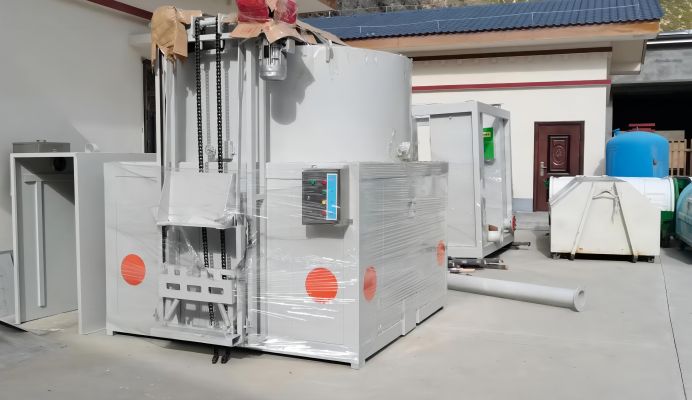
Low‑temperature magnetic‑energy pyrolysis adopts closed micro‑oxygen decomposition working at 20‑380°C without open flame, restraining dioxin formation at source. Waste does not demand fine sorting. It delivers high volume‑reduction ratio. Safe bottom ash can be recycled. It can also match Stirling generators to produce electricity from pyrolysis gas.
Selection depends largely on application scenarios. Incineration fits large‑scale projects with dense population, huge waste output and complete supporting facilities. For islands, tourist zones, fishing ports and remote camps with limited space, few operators and strict environmental rules, low‑temperature pyrolysis is a better match.
Do not only compare initial equipment price. Calculate full‑life‑cycle costs including fuel consumption, flue‑gas maintenance, pollutant disposal and labour. Facing increasingly strict global solid‑waste emission regulations, low‑temperature pyrolysis is becoming a mainstream alternative for distributed small‑scale waste disposal.