Fireprint Stirling Generator Series
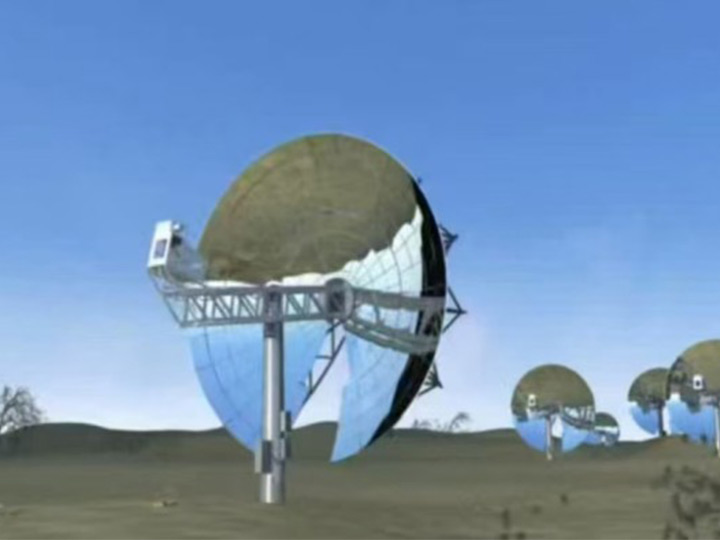
I. Introduction to Stirling Generators
In the context of global energy transition and sustainable development, efficient and environmentally friendly energy conversion and utilization technologies have become a research hotspot. As an external combustion heat engine, the Stirling engine, with its unique thermodynamic cycle and operating characteristics, demonstrates potential application value in fields such as solar power generation, waste heat power generation, and deep refrigeration. This report aims to systematically analyze the feasibility of Stirling engines in these fields, discussing it from multiple dimensions including technical principles, performance advantages, practical cases, and challenges, providing a basis for decision-making in related technology research and development and industrial development.
II. Working Principle and Characteristics of Stirling Engines
2.1 Working Principle Stirling engines operate based on the Stirling cycle, which consists of two isothermal processes and two isochoric processes. Taking a common twin-piston Stirling engine as an example, the working process is as follows:
- 1. Isothermal Compression: The cryogenic piston compresses the cryogenic working fluid (usually an inert gas such as helium or hydrogen) into the high-temperature chamber. During compression, the working fluid releases heat to the cryogenic heat source, maintaining a constant temperature.
- 2. Isochoric Regeneration: Under isochoric conditions, the working fluid passes through the regenerator, absorbing heat stored in the regenerator, causing its temperature to rise.
- 3. Isothermal Expansion: The high-temperature working fluid expands within the high-temperature chamber, pushing the high-temperature piston to do work, while simultaneously absorbing heat from the high-temperature heat source to maintain a constant temperature.
- 4. Isochoric Heat Release: The expanded working fluid returns to the low-temperature chamber, passes through the regenerator again, releasing heat to the regenerator for storage, and its own temperature decreases, completing one cycle.
2.2 Performance Characteristics
- 1. High Efficiency: Theoretically, the Stirling cycle's thermal efficiency is close to that of the Carnot cycle. In practical applications, through optimized design and operating parameters, high heat-to-work conversion efficiency can be achieved, especially in scenarios utilizing medium- and low-temperature heat sources.
- 2. Wide Fuel Adaptability: It can utilize various heat sources such as solar energy, industrial waste heat, biomass energy, and geothermal energy, and even nuclear energy can be used as a heat source, offering high flexibility in energy utilization.
- 3. Good environmental performance: Because the combustion process takes place outside the cylinder, combustion is more complete, and cleaner working fluids can be used, resulting in fewer harmful substances in exhaust emissions and less environmental pollution.
- 4. Smooth operation and low noise: During engine operation, the piston movement is relatively smooth, with minimal mechanical vibration, significantly reducing noise compared to internal combustion engines.
- 5. Long lifespan: With fewer moving parts and the working fluid not participating in combustion or undergoing chemical reactions during operation, wear and corrosion of components are reduced, theoretically resulting in a longer service life.
III. Feasibility Analysis in the Field of Deep Refrigeration
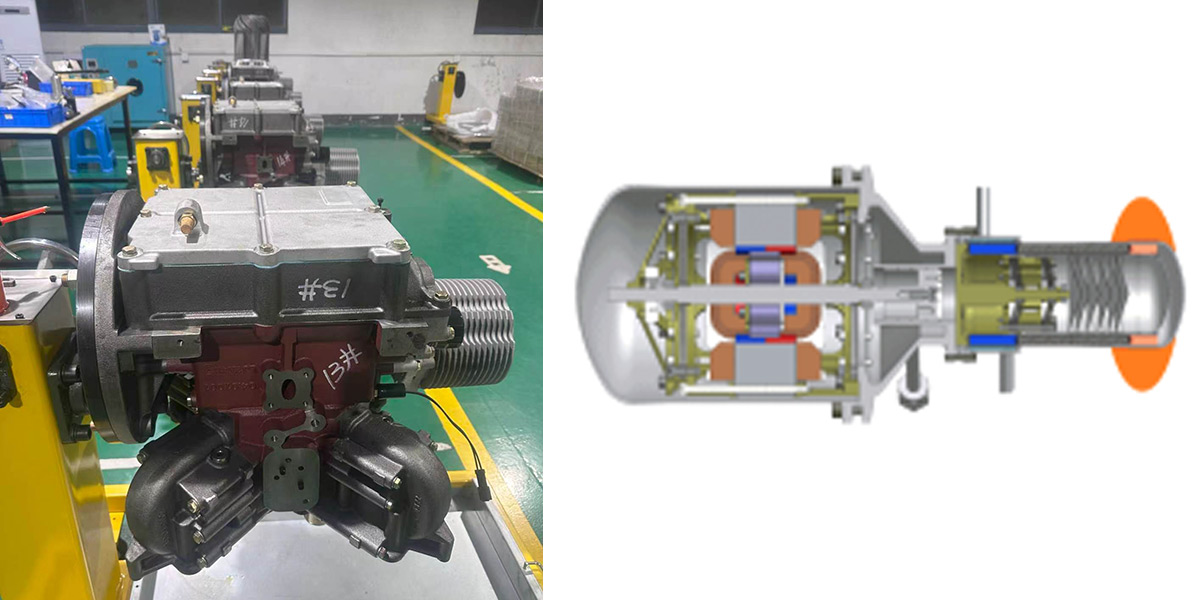
3.1 Working Principle of Stirling Refrigeration Engines
The Stirling cycle is a heat-driven closed thermodynamic cycle that achieves energy conversion through the isothermal expansion and compression of gases (usually inert gases such as helium and hydrogen). It is characterized by low noise, high efficiency, and applicability to various heat sources. In the refrigeration field, the refrigeration effect is achieved through the reverse Stirling cycle (i.e., the Stirling refrigeration cycle). The Stirling refrigerator is a reverse application of the Stirling engine. In a refrigeration cycle, the working fluid absorbs heat at the low-temperature end and releases it to the high-temperature end through processes such as isochoric reheat, isothermal compression, and isochoric exothermics, thus achieving a cryogenic cooling effect. Its working process is similar to that of a Stirling engine, but the energy transfer direction is reversed.
The Stirling refrigerator uses hydrogen (or helium) as the refrigerant, with a pressure of 4-20 MPa and a volume of 3 liters. The low-temperature range achieved by Stirling refrigeration includes deep cooling (120K-20K), cryogenic cooling (20K-0.3K), and ultra-low-temperature cooling (below 0.3K), offering advantages such as a wide cooling temperature range.
3.2 Deep Cooling Demand Scenarios
Deep cooling (generally referring to cooling temperatures below -120℃) has important applications in aerospace, superconductivity, medical, and scientific research fields. For example, in the aerospace field, it is used to cool infrared detectors on satellites to improve detector sensitivity; in the superconducting field, it provides a cryogenic environment for superconducting magnets to ensure superconducting performance.
3.3 Technical Advantages
1. Oil-free pollution: Stirling refrigerators use inert gas as the working fluid and require no lubricating oil during operation, avoiding oil vapor contamination of the refrigeration system and the cooled objects. This is especially important in aerospace and medical fields where cleanliness requirements are extremely high.
2. Long lifespan and high reliability: Compared with traditional refrigeration technologies (such as compression refrigeration), Stirling refrigerators have fewer moving parts and a relatively simple structure. They exhibit high reliability and a long lifespan during long-term continuous operation, meeting the stringent reliability requirements of applications such as aerospace.
3. Precise temperature control capability: By precisely adjusting the operating parameters of the Stirling refrigerator (such as piston movement frequency and stroke), precise control of the refrigeration temperature can be achieved, meeting the high temperature stability requirements of scientific research and other applications.
3.4 Practical Application Cases
- 1. Aerospace: NASA has adopted Stirling refrigerators in multiple satellite projects. For example, on an infrared astronomy satellite, a Stirling refrigerator provides a stable cryogenic environment (down to approximately -200°C) for the infrared detector, ensuring the satellite's ability to detect infrared signals from deep space.
- 2. Superconducting Magnetic Resonance Imaging (MRI) Equipment: Some high-end MRI equipment uses Stirling refrigerators to cool superconducting magnets. For example, an MRI system produced by a well-known medical equipment manufacturer uses a Stirling refrigerator to maintain the temperature of the superconducting magnet at approximately 4.2K, ensuring the magnet's superconducting performance and improving the resolution and accuracy of MRI imaging.
- 3. Cryogenic and Ultra-Cryogenic Refrigeration: Medical and Biological Sample Preservation: Used in cryogenic freezers and liquid nitrogen replacement devices, achieving ultra-low temperatures from -80°C to -200°C for preserving vaccines, stem cells, biological samples, etc. For example, small Stirling refrigerators can be integrated into portable cryogenic storage devices, eliminating the need for liquid nitrogen, suitable for field or primary healthcare settings. Superconducting technology support: Providing a stable cryogenic environment (typically 10⁻⁷ K) for superconducting magnets (such as MRI equipment and superconducting cables), which is easier to miniaturize and operate continuously compared to traditional liquid nitrogen refrigeration. Infrared detection and cryogenic electronics: Providing a cryogenic environment below -196°C for detector chips in military and aerospace infrared detectors (such as missile guidance and satellite remote sensing) to ensure their sensitivity.
IV. Advantages of Stirling Engines in Waste Heat Utilization
4.1 Strong Adaptability to Waste Heat Grade and Wide Coverage The core principle of Stirling engines in industrial waste heat utilization is to convert waste heat emitted during industrial production (such as high-temperature flue gas, exhaust gas, and waste liquid) into mechanical or electrical energy through a closed-loop Stirling cycle. This process can be broken down into four key stages: "waste heat collection - working fluid circulation - energy conversion - output utilization."
The core advantage of Stirling engines lies in their extremely wide range of usable heat source temperatures, adapting to different grades of waste heat: Low-grade waste heat (100-300℃): such as cooling water waste heat from industrial production, boiler flue gas waste heat (temperature often below 300℃), and medium- and low-temperature heat from solar collectors. Traditional internal combustion engines and steam turbines require higher ignition temperatures (usually ≥400℃), making them difficult to utilize effectively. Stirling engines, however, can start and operate at around 100℃ through external heating. In the 200-300℃ range, the energy efficiency ratio (η) can reach 15%-25%. For medium-to-high grade waste heat (300-800℃), such as industrial kiln exhaust (500-800℃), internal combustion engine exhaust (400-600℃), and biomass combustion waste heat, the Stirling engine's energy efficiency is further improved in this range (η can reach 25%-35%). This wide adaptability allows it to cover most waste heat scenarios in industry, transportation, and energy sectors, and it is particularly suitable for solving the problems of "difficult recovery and low utilization rate" of low-grade waste heat.
4.2 Flexible Waste Heat Utilization, Adaptable to Diverse Heat Sources
The Stirling engine boasts strong compatibility with the form and source of waste heat, unaffected by strict limitations on the continuity and stability of the heat source: solid, liquid, and gaseous waste heat can all be utilized. It can directly recover gaseous waste heat such as flue gas and steam (by heating the working fluid through a heat exchanger), and also utilize high-temperature solid surfaces (such as industrial furnace walls) and liquid waste heat such as hot water/hot oil (through contact heat exchange), without requiring complex pretreatment equipment.
Adaptable to intermittent and fluctuating waste heat: For example, unstable heat sources such as solar thermal energy (affected by day/night cycles and weather) and biomass fuel combustion (with large load fluctuations). The Stirling engine's closed-loop system has low sensitivity to heat source fluctuations and can maintain stable operation through heat storage devices (such as phase change materials), while traditional power equipment (such as steam turbines) is prone to sudden efficiency drops or shutdowns due to heat source fluctuations.
4.3 High energy efficiency and stable operation, suitable for long-term continuous operation
Outstanding waste heat recovery efficiency: In low-power scenarios (1-100kW), the waste heat utilization efficiency of the Stirling engine is significantly higher than other technologies. For example, when recovering the exhaust waste heat of a diesel generator (power 50-200kW), the Stirling engine can output an additional 5%-10% of the original power as electricity, increasing the total energy utilization rate to 35%-40%.
Stable operation and long lifespan: The Stirling engine is a closed-cycle engine with no easily damaged parts such as valves and fuel injectors. It has few moving parts (mainly pistons and connecting rods), and the working fluid (such as helium or hydrogen) does not come into contact with the outside environment, resulting in low wear and corrosion risks. In continuous operation scenarios, its design life can reach 10,000-50,000 hours (approximately 10-15 years), with a long maintenance cycle (usually 1-2 times per year), making it suitable for scenarios requiring long-term stable recovery of industrial waste heat.
4.4 Compact structure, convenient installation and integration. Small size and light weight: The core components of the Stirling engine (heater, cooler, displacement device, piston) are highly integrated. For the same power output, its volume is only 1/5 to 1/10 that of a traditional steam turbine, and its weight is about 1/3 that of an internal combustion engine. For example, a 25kW Stirling engine can be designed as a modular unit (approximately 1m × 1m × 1.2m), suitable for installation in space-constrained environments (such as factory workshops, ship engine rooms, and vehicle-mounted waste heat recovery systems).
4.5 Outstanding environmental performance and low operating costs
Zero emissions and low pollution: The Stirling engine operates without combustion (utilizing only external waste heat), resulting in no exhaust gas or waste liquid emissions. The working fluid is an inert gas (such as helium), which has no greenhouse effect or corrosiveness, making it more environmentally friendly than waste heat recovery from internal combustion engines (which still require fuel).
Wide fuel adaptability, reducing energy dependence: In addition to waste heat, it can be compatible with clean energy sources such as biomass, solar energy, and geothermal energy as supplementary heat sources, reducing dependence on fossil fuels. In terms of operating costs, since it mainly relies on free waste heat and requires only a small amount of electricity to maintain the working fluid cycle, its long-term economic efficiency is significant.
4.6 Typical Case Studies of Application Scenarios
Industrial Waste Heat Recovery: In steel plants and glass factories, blast furnace exhaust gas (temperature approximately 300-500℃) is used to drive Stirling engines to generate electricity. Four 25kW units connected in parallel can achieve an annual power generation of 800,000 kWh, reducing CO₂ emissions by approximately 800 tons.
Internal Combustion Engine Waste Heat Recovery: In diesel generator sets, exhaust gas and coolant waste heat are recovered through Stirling engines, increasing overall efficiency by 10%-15%. For example, a 500kW diesel generator equipped with a Stirling recovery system can generate an additional 400,000 kWh of electricity annually.
Solar Thermal Power + Waste Heat Integration: In solar thermal power generation systems, solar energy is used for heating during the day, and industrial waste heat is switched at night or on cloudy days, achieving 24-hour continuous operation with better stability than a single solar energy system.
Stirling engines possess irreplaceable advantages in waste heat utilization (especially low-grade, dispersed waste heat) due to their wide adaptability to different waste heat grades, compact structure, high stability, and environmental friendliness. With advancements in materials technology (such as high-temperature alloys and high-efficiency heat exchangers), their efficiency and cost will be further optimized, and their application scenarios are expected to continue to expand.