Waste-to-Energy Revolution: How China’s Urban Incineration Projects Are Defining Global Sustainability Standards
Waste-to-Energy Revolution: How China’s Urban Incineration Projects Are Defining Global Sustainability Standards
In the heart of bustling metropolises like Shenzhen and Shanghai, a silent transformation is taking place. What was once considered an environmental liability—municipal solid waste—is now being converted into a critical asset through advanced Waste-to-Energy (WtE) technologies. As urbanization accelerates across China, the pressure on landfills has become unsustainable. The solution lies not in burying more trash, but in burning it efficiently to power cities. This narrative explores how Chinese cities are pioneering a new era of Green Infrastructure, turning garbage into electricity while setting global benchmarks for emissions control and resource recovery.
From Landfill Crisis to Energy Solution
For decades, rapid economic growth generated massive amounts of municipal solid waste. Traditional landfilling methods faced severe limitations due to land scarcity and soil contamination risks. Today, China leads the world in installed WtE capacity. Modern incineration plants are no longer smoky nuisances; they are high-tech facilities integrated into urban landscapes. These plants utilize state-of-the-art flue gas treatment systems that ensure emissions meet or exceed European Union standards, proving that industrial efficiency and environmental protection can coexist.
Embracing the Circular Economy Model
The core philosophy driving these projects is the Circular Economy. Instead of a linear "take-make-dispose" model, waste is viewed as a resource loop. In cities like Guangzhou, WtE plants work in tandem with recycling centers. Non-recyclable residues are fed into incinerators, generating steam that drives turbines to produce electricity for the grid. The heat byproduct is often used for district heating or industrial processes, maximizing energy efficiency. Furthermore, bottom ash from combustion is processed into construction materials, closing the loop entirely. This holistic approach minimizes waste volume by over 90%, preserving precious land resources for future generations.
Technological Innovation and Public Trust
A significant challenge for WtE projects globally has been public opposition, often referred to as NIMBY (Not In My Back Yard) syndrome. Chinese developers have addressed this by prioritizing transparency and aesthetic design. Many new plants feature educational centers, rooftop gardens, and even sports facilities, transforming them into community hubs. Advanced monitoring systems allow real-time data access for regulators and citizens, building trust through verifiable cleanliness. This social license to operate is crucial for the long-term success of sustainable urban planning.
A Blueprint for Global Sustainability
As other nations grapple with similar waste management challenges, China’s experience offers a valuable blueprint. The integration of rigorous environmental standards, technological innovation, and community engagement demonstrates a viable path toward Sustainable Development. By converting waste into clean energy, Chinese cities are not only solving local problems but also contributing to global climate goals by reducing methane emissions from landfills and displacing fossil fuel-based power generation.
The story of China’s urban waste-to-energy sector is one of resilience and innovation. It highlights how strategic investment in green infrastructure can turn environmental crises into opportunities for economic and ecological renewal. As technology evolves and policies strengthen, the role of WtE will likely expand, cementing its place as a cornerstone of modern, sustainable urban living.
Rural Waste Disposal Innovation in China
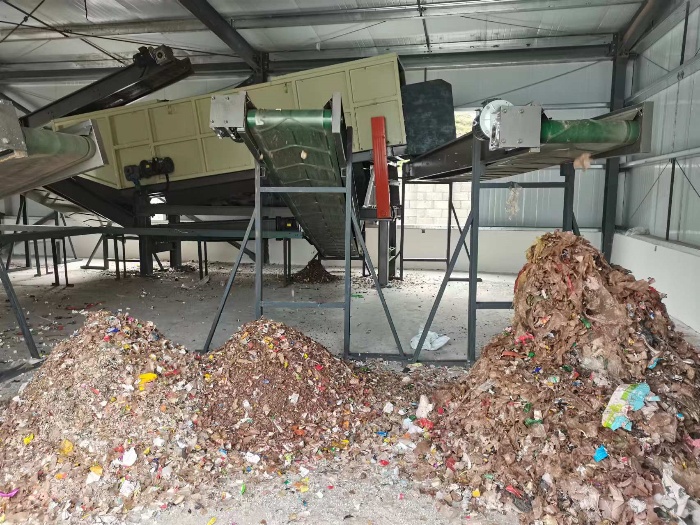
Rural areas across China are gradually phasing out traditional intermittent fuel-fired incinerators in favor of advanced continuous low-temperature magnetic gas thermal decomposition furnaces. With a daily processing capacity of 3 to 5 tons of rural solid waste, such facilities generate sufficient combustible flue gas to power 25 kWh Stirling generators, producing stable on-site electricity and substantially cutting carbon dioxide emissions. Through prolonged oxygen-free thermal decomposition, solid waste residues are converted into powdery negative-ion ash, which can be reused as an effective soil conditioner for agriculture and forestry. This small-scale, decentralized waste treatment technology fills the gap in miniaturized waste-to-energy solutions beyond urban large-scale incineration plants. It delivers a viable model for harmless rural waste disposal and makes a significant contribution to advancing global sustainable rural environmental governance. (PRC Fireprint)
#Waste-to-Energy, #Circular Economy, #Green Infrastructure, #Sustainable Development
You may want to know: